
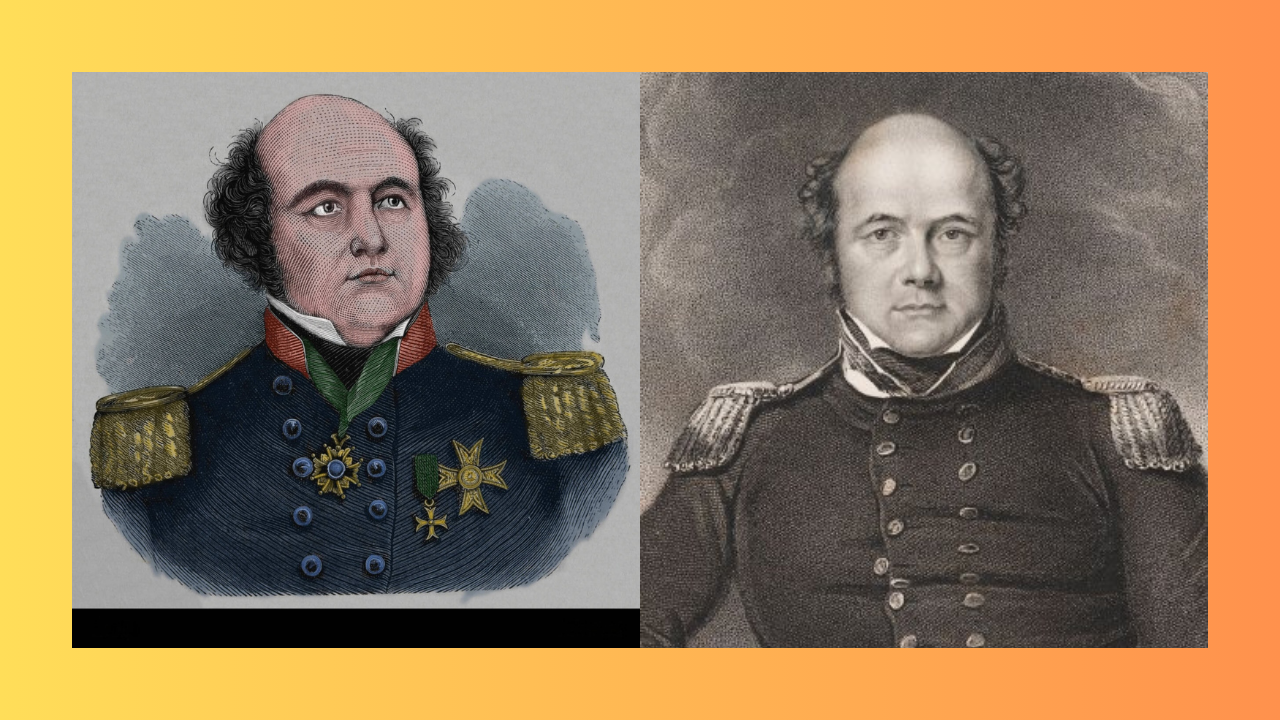
The story of John Franklin and his ill-fated Arctic voyage remains one of the most fascinating mysteries in maritime history. For more than a century and a half, explorers, historians, archaeologists, and researchers sought answers about what happened to the ships and crew that vanished while attempting to chart the Northwest Passage. The disappearance of the Sir John Franklin expedition captured public attention across generations, inspiring countless search missions and historical investigations. Although many details of the tragedy have been uncovered through modern research, the expedition continues to intrigue people because of the harsh conditions, human endurance, and unanswered questions surrounding its final days. The eventual discovery of the Sir John Franklin ship wrecks brought new evidence to light and transformed historians’ understanding of one of the greatest exploration disasters ever recorded.
Who Was John Franklin?
John Franklin was a British Royal Navy officer and Arctic explorer who became famous for his contributions to geographical exploration during the nineteenth century. Born in 1786 in England, Franklin joined the navy at a young age and participated in numerous voyages that helped establish his reputation as a capable seaman and leader. Throughout his career, he took part in expeditions that mapped unknown regions and improved European knowledge of the Arctic.
Before his final voyage, Franklin had already gained extensive experience in northern exploration. His earlier journeys provided valuable information about the Canadian Arctic and contributed to ongoing efforts to locate a navigable route through the Northwest Passage. By the 1840s, he was considered one of Britain’s most respected explorers, making him a natural choice to lead another ambitious Arctic mission.
The Goal of the Sir John Franklin Expedition
The primary objective of the Sir John Franklin expedition was to discover and navigate the remaining unmapped sections of the Northwest Passage. During the nineteenth century, European powers viewed this Arctic sea route as strategically important because it promised a shorter connection between the Atlantic and Pacific Oceans.
In 1845, the British Admiralty launched what was considered one of the most advanced Arctic expeditions of its time. Franklin was placed in command of two specially equipped vessels, HMS Erebus and HMS Terror. These ships represented some of the best technology available for polar exploration. Their hulls were reinforced to withstand heavy ice, steam engines supplemented sail power, and the vessels carried substantial food supplies intended to sustain the crew for several years. Historians widely agree that the expedition appeared exceptionally well prepared when it departed Britain in May 1845.
The Sir John Franklin Ship Fleet
The two vessels selected for the mission would later become some of the most famous ships in exploration history. HMS Erebus served as Franklin’s flagship, while HMS Terror accompanied it as a support vessel. Both ships had previously participated in Antarctic voyages and had demonstrated their durability in extreme environments.
Special modifications were made before departure. Reinforced bows protected the vessels from ice pressure, steam-powered engines provided additional maneuverability, and onboard systems supplied fresh water and heating. These features gave the ships advantages that earlier explorers lacked. Despite these preparations, the Arctic environment would prove far more challenging than expected.
The ships carried a total crew of 129 officers and sailors. Along with food stores, scientific instruments, navigation equipment, and other supplies, the expedition was expected to spend several years exploring northern waters before returning home with valuable discoveries.
The Journey Into the Arctic
The expedition sailed from England in May 1845 amid considerable public enthusiasm. After making supply stops, the vessels entered Arctic waters and continued toward the Canadian archipelago. The last confirmed European sighting occurred in July 1845 when whaling ships observed Erebus and Terror in Baffin Bay.
After that encounter, the expedition disappeared from the historical record. Months passed without communication, and eventually years went by with no signs of Franklin or his crew. Concern grew throughout Britain as families and officials realized that something had gone terribly wrong. By the late 1840s, large-scale search operations were being organized to locate the missing explorers.
Sir John Franklin Trapped in the Ice
Evidence discovered later revealed that the expedition became trapped in ice near King William Island. The ships were unable to break free and remained immobilized for extended periods. The Arctic environment presented overwhelming challenges, including severe cold, limited food resources, and isolation from rescue.
Historical records recovered by search parties indicate that the crew spent multiple winters stranded in the region. Conditions deteriorated as time passed. Sir John Franklin himself died in June 1847, leaving command responsibilities to senior officers. As the situation became increasingly desperate, the remaining crew eventually abandoned the vessels and attempted to travel south across the frozen landscape.
The Massive Search Effort Sir John Franklin
The disappearance of the expedition sparked one of the largest search campaigns in naval history. Dozens of expeditions were launched over several decades in hopes of locating the missing men and ships. Searchers recovered scattered artifacts, graves, written messages, and human remains, but the ultimate fate of the vessels remained unknown.
One of the most important discoveries was a written note found on King William Island. The document provided crucial information regarding the expedition’s timeline, including Franklin’s death and the decision to abandon the ships. Even with this evidence, historians still lacked a complete understanding of what happened after the crew left the vessels.
Inuit Knowledge and Historical Evidence
An essential part of solving the mystery came from Inuit communities living in the Arctic region. Indigenous oral histories preserved accounts of encounters with members of the expedition and observations of the ships. For many years, these accounts were overlooked or dismissed by outside investigators.
Modern researchers eventually recognized the value of Inuit knowledge. Information passed down through generations helped narrow search areas and guided later investigations. The eventual discoveries of both Erebus and Terror demonstrated the remarkable accuracy of many Inuit observations. Historians now regard Indigenous testimony as one of the most important sources for understanding the fate of the Franklin expedition.
Discovery of HMS Erebus
After nearly 170 years of speculation, a major breakthrough occurred in 2014. Canadian researchers located the wreck of HMS Erebus in the waters near King William Island. Advanced sonar technology, underwater archaeology, and historical research contributed to the discovery.
The finding confirmed that one of the lost vessels had survived beneath Arctic waters for generations. Archaeologists recovered numerous artifacts that offered new insights into life aboard the expedition. The discovery represented one of the most significant achievements in maritime archaeology and renewed public interest in the Franklin mystery.
Discovery of HMS Terror
Another remarkable breakthrough followed in 2016 when researchers located HMS Terror. The ship was found in an exceptionally preserved state, providing an unprecedented opportunity to study a nineteenth-century exploration vessel. Investigators were surprised by the condition of the wreck, which appeared largely intact despite spending more than a century beneath Arctic waters.
The discovery challenged some earlier assumptions regarding the expedition’s final movements and raised new questions about what happened after the ships were abandoned. The preservation of Terror has allowed researchers to continue examining artifacts and ship structures that may reveal additional clues about the crew’s final years.
Modern Research Continues
Even though both ships have been found, researchers continue to investigate the expedition. Advances in archaeology, forensic science, and DNA analysis have produced important new findings. Recent studies have identified additional crew members from recovered remains, helping historians better understand who survived longest and where individuals may have traveled after leaving the ships. These discoveries continue to provide valuable information about the human story behind the tragedy.
Ongoing work at the wreck sites has also uncovered navigation instruments, personal belongings, medical supplies, and other artifacts that offer glimpses into daily life aboard the expedition. Each discovery contributes another piece to the puzzle of what happened nearly two centuries ago.
Conclusion
The story of John Franklin, the Sir John Franklin expedition, and the Sir John Franklin ship wrecks remains one of history’s most compelling exploration narratives. What began as an ambitious mission to complete the Northwest Passage ended in tragedy, claiming the lives of all 129 crew members. Yet the mystery did not end there. Generations of searchers, historians, archaeologists, and Indigenous knowledge keepers worked together to uncover the truth.
The discoveries of HMS Erebus and HMS Terror transformed a centuries-old mystery into an ongoing scientific investigation. While many questions have been answered, the expedition continues to fascinate researchers and history enthusiasts around the world. The legacy of Sir John Franklin endures not only through the ships that were finally found but also through the enduring human story of courage, ambition, and survival in one of Earth’s most unforgiving environments.
